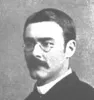
Birth date
12/30/1865
Death date
18 January 1936
Country
Bombay
Poems by this Poet
Displaying 1071 - 1080 of 1087
| Title | Post date | Rating | Comments |
|---|---|---|---|
| Boots | 0 | ||
| Bill 'Awkins | 0 | ||
| "Birds Of Prey March" | 0 | ||
| Belts | 0 | ||
| Barrack-Room Ballads | 0 | ||
| Banquet Night | 0 | ||
| As the Bell Clinks | 0 | ||
| "Back To The Army Again | 1 | ||
| Arithmetic on the Frontier | 0 | ||
| Army Headquarters | 0 |
an English poet, short-story writer, and novelist chiefly remembered for his celebration of British imperialism, tales and poems of British soldiers in India, and his tales for children. Kipling received the 1907 Nobel Prize for Literature. He was born in Bombay, in the Bombay Presidency of British India, and was taken by his family to England when he was five years old. Kipling is best known for his works of fiction, including The Jungle Book (a collection of stories which includes "Rikki-Tikki-Tavi"), Just So Stories (1902) (1894), Kim (1901) (a tale of adventure), many short stories, including "The Man Who Would Be King" (1888); and his poems, including Mandalay (1890), Gunga Din (1890), The White Man's Burden (1899) and If— (1910). He is regarded as a major "innovator in the art of the short story"; his children's books are enduring classics of children's literature; and his best works are said to exhibit "a versatile and luminous narrative gift".
Kipling was one of the most popular writers in England, in both prose and verse, in the late 19th and early 20th centuries. Henry James said: "Kipling strikes me personally as the most complete man of genius (as distinct from fine intelligence) that I have ever known." In 1907 he was awarded the Nobel Prize in Literature, making him the first English-language writer to receive the prize, and to date he remains its youngest recipient. Among other honours, he was sounded out for the British Poet Laureateship and on several occasions for a knighthood, all of which he declined.
Kipling's subsequent reputation has changed according to the political and social climate of the age and the resulting contrasting views about him continued for much of the 20th century. George Orwell called him a "prophet of British imperialism". Literary critic Douglas Kerr wrote: "He [Kipling] is still an author who can inspire passionate disagreement and his place in literary and cultural history is far from settled. But as the age of the European empires recedes, he is recognised as an incomparable, if controversial, interpreter of how empire was experienced. That, and an increasing recognition of his extraordinary narrative gifts, make him a force to be reckoned with."
Childhood and Early Life
Rudyard Kipling was born on 30 December 1865 in Bombay, in British India to Alice Kipling (née MacDonald) and (John) Lockwood Kipling. Alice (one of four remarkable Victorian sisters) was a vivacious woman about whom a future Viceroy of India would say, "Dullness and Mrs. Kipling cannot exist in the same room." Lockwood Kipling, a sculptor and pottery designer, was the Principal and Professor of Architectural Sculpture at the newly founded Sir Jamsetjee Jeejeebhoy School of Art and Industry in Bombay.
John and Alice had met in 1863 and courted at Rudyard Lake in Rudyard, Staffordshire, England. They married, and moved to India in 1865. They had been so moved by the beauty of the Rudyard Lake area that when their first child was born, they included a reference to the lake in naming him. Alice's sister Georgiana was married to painter Edward Burne-Jones, and her sister Agnes was married to painter Edward Poynter. Kipling's most famous relative was his first cousin, Stanley Baldwin, who was Conservative Prime Minister of the UK three times in the 1920s and 1930s. Kipling's birth home still stands on the campus of the J J School of Art in Mumbai and for many years was used as the Dean's residence. Mumbai historian Foy Nissen points out, however, that although the cottage bears a plaque stating that this is the site where Kipling was born, the original cottage was torn down decades ago and a new one was built in its place. The wooden bungalow has been empty and locked up for years.
Of Bombay, Kipling was to write:
Mother of Cities to me,
For I was born in her gate,
Between the palms and the sea,
Where the world-end steamers wait.
According to Bernice M. Murphy, "Kipling’s parents considered themselves 'Anglo-Indians' (a term used in the 19th century for people of British origin living in India) and so too would their son, though he spent the bulk of his life elsewhere. Complex issues of identity and national allegiance would become prominent features in his fiction." Kipling referred to such conflicts; for example: "In the afternoon heats before we took our sleep, she (the Portuguese ayah, or nanny) or Meeta (the Hindu bearer, or male attendant) would tell us stories and Indian nursery songs all unforgotten, and we were sent into the dining-room after we had been dressed, with the caution 'Speak English now to Papa and Mamma.' So one spoke 'English', haltingly translated out of the vernacular idiom that one thought and dreamed in".
Kipling's days of "strong light and darkness" in Bombay ended when he was five years old. As was the custom in British India, he and his three-year-old sister, Alice ("Trix"), were taken to England—in their case to Southsea (Portsmouth), to live with a couple who boarded children of British nationals who were serving in India. The two children lived with the couple, Captain and Mrs. Holloway, at their house, Lorne Lodge, for the next six years. In his autobiography, published some 65 years later, Kipling recalled the stay with horror, and wondered ironically if the combination of cruelty and neglect which he experienced there at the hands of Mrs. Holloway might not have hastened the onset of his literary life: "If you cross-examine a child of seven or eight on his day’s doings (specially when he wants to go to sleep) he will contradict himself very satisfactorily. If each contradiction be set down as a lie and retailed at breakfast, life is not easy. I have known a certain amount of bullying, but this was calculated torture — religious as well as scientific. Yet it made me give attention to the lies I soon found it necessary to tell: and this, I presume, is the foundation of literary effort".
Trix fared better at Lorne Lodge; Mrs. Holloway apparently hoped that Trix would eventually marry the Holloway son. The two Kipling children, however, did have relatives in England whom they could visit. They spent a month each Christmas with their maternal aunt Georgiana ("Georgy"), and her husband at their house, "The Grange" in Fulham, London, which Kipling was to call "a paradise which I verily believe saved me." In the spring of 1877, Alice returned from India and removed the children from Lorne Lodge. Kipling remembers, "Often and often afterwards, the beloved Aunt would ask me why I had never told any one how I was being treated. Children tell little more than animals, for what comes to them they accept as eternally established. Also, badly-treated children have a clear notion of what they are likely to get if they betray the secrets of a prison-house before they are clear of it".
In January 1878 Kipling was admitted to the United Services College, at Westward Ho!, Devon, a school founded a few years earlier to prepare boys for the British Army. The school proved rough going for him at first, but later led to firm friendships, and provided the setting for his schoolboy stories Stalky & Co. (1899). During his time there, Kipling also met and fell in love with Florence Garrard, who was boarding with Trix at Southsea (to which Trix had returned). Florence was to become the model for Maisie in Kipling's first novel, The Light that Failed (1891).
Near the end of his stay at the school, it was decided that he lacked the academic ability to get into Oxford University on a scholarship and his parents lacked the wherewithal to finance him, so Lockwood obtained a job for his son in Lahore, Punjab (now in Pakistan), where Lockwood was now Principal of the Mayo College of Art and Curator of the Lahore Museum. Kipling was to be assistant editor of a small local newspaper, the Civil & Military Gazette.
He sailed for India on 20 September 1882 and arrived in Bombay on 18 October. He described this moment years later: "So, at sixteen years and nine months, but looking four or five years older, and adorned with real whiskers which the scandalised Mother abolished within one hour of beholding, I found myself at Bombay where I was born, moving among sights and smells that made me deliver in the vernacular sentences whose meaning I knew not. Other Indian-born boys have told me how the same thing happened to them." This arrival changed Kipling, as he explains, "There were yet three or four days’ rail to Lahore, where my people lived. After these, my English years fell away, nor ever, I think, came back in full strength".
Early Travels
The Civil and Military Gazette in Lahore, the newspaper which Kipling was to call "mistress and most true love," appeared six days a week throughout the year except for a one-day break each for Christmas and Easter. Kipling was worked hard by editor Stephen Wheeler, but Kipling's need to write was unstoppable. In 1886 he published his first collection of verse, Departmental Ditties. That year also brought a change of editors at the newspaper; Kay Robinson, the new editor, allowed more creative freedom and Kipling was asked to contribute short stories to the newspaper.
During the summer of 1883, Kipling visited Shimla (then known as Simla), a well-known hill station and summer capital of British India. By then it was established practice for the Viceroy of India and the government to move to Simla for six months and the town became a "centre of power as well as pleasure." Kipling's family became yearly visitors to Simla and Lockwood Kipling was asked to serve in the Christ Church there. Rudyard Kipling returned to Simla for his annual leave each year from 1885 to 1888, and the town figured prominently in many of the stories that he wrote for the Gazette. He describes this time: "My month’s leave at Simla, or whatever Hill Station my people went to, was pure joy—every golden hour counted. It began in heat and discomfort, by rail and road. It ended in the cool evening, with a wood fire in one’s bedroom, and next morn—thirty more of them ahead!—the early cup of tea, the Mother who brought it in, and the long talks of us all together again. One had leisure to work, too, at whatever play-work was in one’s head, and that was usually full." Back in Lahore, some thirty-nine stories appeared in the Gazette between November 1886 and June 1887. Most of these stories were included in Plain Tales from the Hills, Kipling's first prose collection, which was published in Calcutta in January 1888, a month after his 22nd birthday. Kipling's time in Lahore, however, had come to an end. In November 1887 he was transferred to the Gazette's much larger sister newspaper, The Pioneer, in Allahabad in the United Provinces.
Kipling's writing continued at a frenetic pace; in 1888 he published six collections of short stories: Soldiers Three, The Story of the Gadsbys, In Black and White, Under the Deodars, The Phantom Rickshaw, and Wee Willie Winkie, containing a total of 41 stories, some quite long. In addition, as The Pioneer's special correspondent in western region of Rajputana, he wrote many sketches that were later collected in Letters of Marque and published in From Sea to Sea and Other Sketches, Letters of Travel.
Kipling was discharged from The Pioneer in early 1889, after a dispute. By this time he had been increasingly thinking about the future. He sold the rights to his six volumes of stories for £200 and a small royalty, and the Plain Tales for £50; in addition, from The Pioneer, he received six-months' salary in lieu of notice. He decided to use this money to make his way to London, the centre of the literary universe in the British Empire. On 9 March 1889, Kipling left India, travelling first to San Francisco via Rangoon, Singapore, Hong Kong and Japan. He then travelled through the United States, writing articles for The Pioneer that were later published in From Sea to Sea and Other Sketches, Letters of Travel. Starting his American travels in San Francisco, Kipling journeyed north to Portland, Oregon; to Seattle, Washington; up into Canada, to Victoria and Vancouver, British Columbia; back into the U.S. to Yellowstone National Park; down to Salt Lake City; then east to Omaha, Nebraska, and on to Chicago, Illinois; then to Beaver, Pennsylvania on the Ohio River to visit the Hill family; from there he went to Chautauqua with Professor Hill, and later to Niagara Falls, Toronto, Washington, D.C., New York and Boston. In the course of this journey he met Mark Twain in Elmira, New York, and was deeply impressed. He then crossed the Atlantic, and reached Liverpool in October 1889. He soon made his début in the London literary world to great acclaim.
Career as A Writer
London
In London Kipling had several stories accepted by various magazine editors. He also found a place to live for the next two years:
Meantime, I had found me quarters in Villiers Street, Strand, which forty-six years ago was primitive and passionate in its habits and population. My rooms were small, not over-clean or well-kept, but from my desk I could look out of my window through the fanlight of Gatti’s Music-Hall entrance, across the street, almost on to its stage. The Charing Cross trains rumbled through my dreams on one side, the boom of the Strand on the other, while, before my windows, Father Thames under the Shot Tower walked up and down with his traffic.
In the next two years he published a novel, The Light that Failed, had a nervous breakdown, and met an American writer and publishing agent, Wolcott Balestier, with whom he collaborated on a novel, The Naulahka (a title which he uncharacteristically misspelt; see below). In 1891, on the advice of his doctors, Kipling embarked on another sea voyage visiting South Africa, Australia, New Zealand and once again India. However, he cut short his plans for spending Christmas with his family in India when he heard of Balestier's sudden death from typhoid fever, and immediately decided to return to London. Before his return, he had used the telegram to propose to and be accepted by Wolcott's sister Caroline Starr Balestier (1862–1939), called “Carrie”, whom he had met a year earlier, and with whom he had apparently been having an intermittent romance. Meanwhile, late in 1891, his collection of short stories of the British in India, Life's Handicap, was published in London.
On 18 January 1892, Carrie Balestier (aged 29) and Rudyard Kipling (aged 26) were married in London, in the "thick of an influenza epidemic, when the undertakers had run out of black horses and the dead had to be content with brown ones." The wedding was held at All Souls Church, Langham Place. Henry James gave the bride away.
United States
The couple settled upon a honeymoon that would take them first to the United States (including a stop at the Balestier family estate near Brattleboro, Vermont) and then on to Japan. However, when they arrived in Yokohama, Japan, they discovered that their bank, The New Oriental Banking Corporation, had failed. Taking this loss in their stride, they returned to the U.S., back to Vermont—Carrie by this time was pregnant with their first child—and rented a small cottage on a farm near Brattleboro for ten dollars a month. According to Kipling, "We furnished it with a simplicity that fore-ran the hire-purchase system. We bought, second or third hand, a huge, hot-air stove which we installed in the cellar. We cut generous holes in our thin floors for its eight-inch [20 cm] tin pipes (why we were not burned in our beds each week of the winter I never can understand) and we were extraordinarily and self-centredly content."
In this house, which they called Bliss Cottage, their first child, Josephine, was born "in three foot of snow on the night of 29 December 1892. Her Mother’s birthday being the 31st and mine the 30th of the same month, we congratulated her on her sense of the fitness of things ..."
It was also in this cottage that the first dawnings of the Jungle Books came to Kipling: " . . workroom in the Bliss Cottage was seven feet by eight, and from December to April the snow lay level with its window-sill. It chanced that I had written a tale about Indian Forestry work which included a boy who had been brought up by wolves. In the stillness, and suspense, of the winter of ’92 some memory of the Masonic Lions of my childhood’s magazine, and a phrase in Haggard’s Nada the Lily, combined with the echo of this tale. After blocking out the main idea in my head, the pen took charge, and I watched it begin to write stories about Mowgli and animals, which later grew into the two Jungle Books ". With Josephine's arrival, Bliss Cottage was felt to be congested, so eventually the couple bought land—10 acres (40,000 m2) on a rocky hillside overlooking the Connecticut River—from Carrie's brother Beatty Balestier, and built their own house.
Kipling named the house "Naulakha" in honour of Wolcott and of their collaboration, and this time the name was spelled correctly. From his early years in Lahore (1882–87), Kipling had become enthused by the Mughal architecture, especially the Naulakha pavilion situated in Lahore Fort, which eventually became an inspiration for the title of his novel as well as the house. The house still stands on Kipling Road, three miles (5 km) north of Brattleboro in Dummerston, Vermont: a big, secluded, dark-green house, with shingled roof and sides, which Kipling called his "ship", and which brought him "sunshine and a mind at ease." His seclusion in Vermont, combined with his healthy "sane clean life", made Kipling both inventive and prolific.
In the short span of four years, he produced, in addition to the Jungle Books, a collection of short stories (The Day's Work), a novel (Captains Courageous), and a profusion of poetry, including the volume The Seven Seas. The collection of Barrack-Room Ballads, first published individually for the most part in 1890, which contains his poems "Mandalay" and "Gunga Din" was issued in March 1892. He especially enjoyed writing the Jungle Books—both masterpieces of imaginative writing—and enjoyed, too, corresponding with the many children who wrote to him about them.
The writing life in Naulakha was occasionally interrupted by visitors, including his father, who visited soon after his retirement in 1893, and British author Arthur Conan Doyle, who brought his golf-clubs, stayed for two days, and gave Kipling an extended golf lesson. Kipling seemed to take to golf, occasionally practising with the local Congregational minister, and even playing with red-painted balls when the ground was covered in snow. However, wintertime golf was "not altogether a success because there were no limits to a drive; the ball might skid two miles (3 km) down the long slope to Connecticut river."
From all accounts, Kipling loved the outdoors, not least of whose marvels in Vermont was the turning of the leaves each fall. He described this moment in a letter: "A little maple began it, flaming blood-red of a sudden where he stood against the dark green of a pine-belt. Next morning there was an answering signal from the swamp where the sumacs grow. Three days later, the hill-sides as fast as the eye could range were afire, and the roads paved, with crimson and gold. Then a wet wind blew, and ruined all the uniforms of that gorgeous army; and the oaks, who had held themselves in reserve, buckled on their dull and bronzed cuirasses and stood it out stiffly to the last blown leaf, till nothing remained but pencil-shadings of bare boughs, and one could see into the most private heart of the woods."
In February 1896 Elsie Kipling, the couple's second daughter, was born. By this time, according to several biographers, their marital relationship was no longer light-hearted and spontaneous. Although they would always remain loyal to each other, they seemed now to have fallen into set roles. In a letter to a friend who had become engaged around this time, the 30 year old Kipling offered this sombre counsel: marriage principally taught "the tougher virtues—such as humility, restraint, order, and forethought."
The Kiplings loved life in Vermont and might have lived out their lives there, were it not for two incidents—one of global politics, the other of family discord—that hastily ended their time there. By the early 1890s the United Kingdom and Venezuela were in a border dispute involving British Guiana. The U.S. had made several offers to arbitrate, but in 1895 the new American Secretary of State Richard Olney upped the ante by arguing for the American "right" to arbitrate on grounds of sovereignty on the continent (see the Olney interpretation as an extension of the Monroe Doctrine). This raised hackles in the UK and the situation grew into a major Anglo-American crisis, with talk of war on both sides.
Although the crisis led to greater U.S.-British cooperation, at the time Kipling was bewildered by what he felt was persistent anti-British sentiment in the U.S., especially in the press. He wrote in a letter that it felt like being "aimed at with a decanter across a friendly dinner table." By January 1896 he had decided to end his family's "good wholesome life" in the U.S. and seek their fortunes elsewhere.
A family dispute became the final straw. For some time, relations between Carrie and her brother Beatty Balestier had been strained owing to his drinking and insolvency. In May 1896 an inebriated Beatty encountered Kipling on the street and threatened him with physical harm. The incident led to Beatty's eventual arrest, but in the subsequent hearing, and the resulting publicity, Kipling's privacy was destroyed, and he was left feeling miserable and exhausted. In July 1896, a week before the hearing was to resume, the Kiplings hurriedly packed their belongings and left the United States.
Devon
By September 1896 the Kiplings were in Torquay on the coast of Devon, in a hillside home overlooking the sea. Although Kipling did not much care for his new house, whose design, he claimed, left its occupants feeling dispirited and gloomy, he managed to remain productive and socially active. Kipling was now a famous man, and in the previous two or three years, had increasingly been making political pronouncements in his writings. The Kiplings had welcomed their first son, John, in August 1896. Kipling had begun work on two poems, "Recessional" (1897) and "The White Man's Burden" (1899) which were to create controversy when published. Regarded by some as anthems for enlightened and duty-bound empire-building (that captured the mood of the Victorian age), the poems equally were regarded by others as propaganda for brazenfaced imperialism and its attendant racial attitudes; still others saw irony in the poems and warnings of the perils of empire.
Take up the White Man's burden—
Send forth the best ye breed—
Go, bind your sons to exile
To serve your captives' need;
To wait, in heavy harness,
On fluttered folk and wild—
Your new-caught sullen peoples,
Half devil and half child.
—The White Man's Burden
There was also foreboding in the poems, a sense that all could yet come to naught.
Far-called, our navies melt away;
On dune and headland sinks the fire:
Lo, all our pomp of yesterday
Is one with Nineveh and Tyre!
Judge of the Nations, spare us yet.
Lest we forget – lest we forget!
—Recessional
A prolific writer during his time in Torquay, he also wrote Stalky & Co., a collection of school stories (born of his experience at the United Services College in Westward Ho!) whose juvenile protagonists displayed a know-it-all, cynical outlook on patriotism and authority. According to his family, Kipling enjoyed reading aloud stories from Stalky & Co. to them, and often went into spasms of laughter over his own jokes.
South Africa
In early 1898 the Kiplings travelled to South Africa for their winter holiday, thus beginning an annual tradition which (excepting the following year) was to last until 1908. They always stayed in "The Woolsack", a house on Cecil Rhodes' estate at Groote Schuur; it was within walking distance of Rhodes' mansion. With his new reputation as Poet of the Empire, Kipling was warmly received by some of the most influential politicians of the Cape Colony, including Rhodes, Sir Alfred Milner, and Leander Starr Jameson. Kipling cultivated their friendship and came to admire the men and their politics. The period 1898–1910 was crucial in the history of South Africa and included the Second Boer War (1899–1902), the ensuing peace treaty, and the 1910 formation of the Union of South Africa. Back in England, Kipling wrote poetry in support of the British cause in the Boer War and on his next visit to South Africa in early 1900, he helped start a newspaper, The Friend, for Lord Roberts for the British troops in Bloemfontein, the newly captured capital of the Orange Free State. Although his journalistic stint was to last only two weeks, it was Kipling's first work on a newspaper staff since he left The Pioneer in Allahabad more than ten years earlier. At The Friend he made lifelong friendships with Perceval Landon, H. A. Gwynne and others. He also wrote articles published more widely expressing his views on the conflict. Kipling penned an inscription for the Honoured Dead Memorial (Siege memorial) in Kimberley.
Sussex
In 1897, Kipling moved from Torquay to Rottingdean, East Sussex; first to North End House and later to The Elms. In 1902 Kipling bought Batemans, a house built in 1634 and located in rural Burwash, East Sussex, England. The house, along with the surrounding buildings, the mill and 33 acres (130,000 m2) was purchased for £9,300. It had no bathroom, no running water upstairs and no electricity, but Kipling loved it: "Behold us, lawful owners of a grey stone lichened house—A.D. 1634 over the door—beamed, panelled, with old oak staircase, and all untouched and unfaked. It is a good and peaceable place. We have loved it ever since our first sight of it." (from a November 1902 letter).
Other Writing
Kipling began collecting material for another of his children's classics, Just So Stories for Little Children. That work was published in 1902, the year after Kim was first issued.
On a visit to the United States in 1899, Kipling and Josephine developed pneumonia, from which she eventually died. During the First World War, he wrote a booklet The Fringes of the Fleet containing essays and poems on various nautical subjects of the war. Some of the poems were set to music by English composer Edward Elgar.
Kipling wrote two science fiction short stories, With the Night Mail (1905) and As Easy As A. B. C (1912), both set in the 21st century in Kipling's Aerial Board of Control universe. These read like modern hard science fiction.
In 1934 he published a short story in Strand Magazine, "Proofs of Holy Writ", which postulated that William Shakespeare had helped to polish the prose of the King James Bible. In the non-fiction realm he also became involved in the debate over the British response to the rise in German naval power, publishing a series of articles in 1898 which were collected as A Fleet in Being.
Peak of his career
The first decade of the 20th century saw Kipling at the height of his popularity. In 1906 he wrote the song "Land of our Birth, We Pledge to Thee". In 1907 he was awarded the Nobel Prize for Literature. The prize citation said: "In consideration of the power of observation, originality of imagination, virility of ideas and remarkable talent for narration which characterise the creations of this world-famous author." Nobel prizes had been established in 1901 and Kipling was the first English-language recipient. At the award ceremony in Stockholm on 10 December 1907, the Permanent Secretary of the Swedish Academy, Carl David af Wirsén, praised both Kipling and three centuries of English literature:
The Swedish Academy, in awarding the Nobel Prize in Literature this year to Rudyard Kipling, desires to pay a tribute of homage to the literature of England, so rich in manifold glories, and to the greatest genius in the realm of narrative that that country has produced in our times.
"Book-ending" this achievement was the publication of two connected poetry and story collections: Puck of Pook's Hill (1906), and Rewards and Fairies (1910). The latter contained the poem "If—". In a 1995 BBC opinion poll, it was voted the UK's favourite poem. This exhortation to self-control and stoicism is arguably Kipling's most famous poem.
Kipling sympathised with the anti-Home Rule stance of Irish Unionists. He was friends with Edward Carson, the Dublin-born leader of Ulster Unionism, who raised the Ulster Volunteers to oppose "Home Rule" in Ireland. Kipling wrote the poem "Ulster" in 1912 reflecting this. Kipling was a staunch opponent of Bolshevism, a position which he shared with his friend Henry Rider Haggard. The two had bonded upon Kipling's arrival in London in 1889 largely on the strength of their shared opinions, and they remained lifelong friends.
Many have wondered why he was never made Poet Laureate. Some claim that he was offered the post during the interregnum of 1892–96 and turned it down.
At the beginning of World War I, like many other writers, Kipling wrote pamphlets which enthusiastically supported the UK's war aims.
Freemasonry
According to the English magazine Masonic Illustrated, Kipling became a Freemason in about 1885, prior to the usual minimum age of 21. He was initiated into Hope and Perseverance Lodge No. 782 in Lahore. He later wrote to The Times, "I was Secretary for some years of the Lodge . . . , which included Brethren of at least four creeds. I was entered [as an Apprentice] by a member from Brahmo Somaj, a Hindu, passed [to the degree of Fellow Craft] by a Mohammedan, and raised [to the degree of Master Mason] by an Englishman. Our Tyler was an Indian Jew." Kipling so loved his masonic experience that he memorialised its ideals in his famous poem, "The Mother Lodge".
Son's death in First World War
Kipling's son John died in World War I, at the Battle of Loos in September 1915, at age 18. John had wanted to join the military, but his eyesight was too poor. He tried twice to enlist, but was rejected. His father had been life-long friends with Lord Roberts, commander-in-chief of the British Army, and colonel of the Irish Guards, and at Rudyard's request, John was accepted into the Irish Guards. He was sent to Loos two days into the battle in a reinforcement contingent. He was last seen stumbling through the mud blindly, screaming in agony after an exploding shell ripped his face apart. A body identified as his was not found until 1992, although that identification has been challenged.
After his son's death, Kipling wrote, "If any question why we died/ Tell them, because our fathers lied." It is speculated that these words may reveal his feelings of guilt at his role in getting John a commission in the Irish Guards.
John's death has been linked to Kipling's 1916 poem "My Boy Jack", notably in the play My Boy Jack and its subsequent television adaptation, along with the documentary Rudyard Kipling: A Remembrance Tale. However, the poem was originally published at the head of a story about the Battle of Jutland and appears to refer to a death at sea; the 'Jack' referred to is probably a generic 'Jack Tar'. Kipling was said to help assuage his grief over the death of his son through reading the novels of Jane Austen aloud to his wife and daughter.
Partly in response to John's death, Kipling joined Sir Fabian Ware's Imperial War Graves Commission (now the Commonwealth War Graves Commission), the group responsible for the garden-like British war graves that can be found to this day dotted along the former Western Front and all the other locations around the world where troops of the British Empire lie buried. His most significant contribution to the project was his selection of the biblical phrase "Their Name Liveth For Evermore" (Ecclesiasticus 44.14, KJV) found on the Stones of Remembrance in larger war graves and his suggestion of the phrase "Known unto God" for the gravestones of unidentified servicemen. He chose the inscription "The Glorious Dead" on the Cenotaph, Whitehall, London. He also wrote a two-volume history of the Irish Guards, his son's regiment, that was published in 1923 and is considered to be one of the finest examples of regimental history. Kipling's moving short story, "The Gardener", depicts visits to the war cemeteries, and the poem "The King's Pilgrimage" (1922) depicts a journey which King George V made, touring the cemeteries and memorials under construction by the Imperial War Graves Commission. With the increasing popularity of the automobile, Kipling became a motoring correspondent for the British press, and wrote enthusiastically of his trips around England and abroad, even though he was usually driven by a chauffeur.
Kipling became friends with a French soldier whose life had been saved in the First World War when his copy of Kim, which he had in his left breast pocket, stopped a bullet. The soldier presented Kipling with the book (with bullet still embedded) and his Croix de Guerre as a token of gratitude. They continued to correspond, and when the soldier, Maurice Hammoneau, had a son, Kipling insisted on returning the book and medal.
In 1922 Kipling, who had made reference to the work of engineers in some of his poems and writings, was asked by a University of Toronto civil engineering professor for his assistance in developing a dignified obligation and ceremony for graduating engineering students. Kipling was enthusiastic in his response and shortly produced both, formally entitled "The Ritual of the Calling of an Engineer". Today, engineering graduates all across Canada are presented with an iron ring at the ceremony as a reminder of their obligation to society. In 1922 Kipling also became Lord Rector of St Andrews University in Scotland, a three-year position.
Death and legacy
Kipling kept writing until the early 1930s, but at a slower pace and with much less success than before. He died of a perforated duodenal ulcer on 18 January 1936, two days before George V, at the age of 70. (His death had in fact previously been incorrectly announced in a magazine, to which he wrote, "I've just read that I am dead. Don't forget to delete me from your list of subscribers.")
Rudyard Kipling was cremated at Golders Green Crematorium and his ashes were buried in Poets' Corner, part of the South Transept of Westminster Abbey, where many distinguished literary people are buried or commemorated.
In 2010 the International Astronomical Union approved that a crater on the planet Mercury would be named after Kipling – one of ten newly discovered impact craters observed by the MESSENGER spacecraft in 2008-9.
Posthumous Reputation
Various writers, most notably Edmund Candler, were strongly influenced by Kipling's writing. T. S. Eliot, a very different poet, edited A Choice of Kipling's Verse (1943), although in doing so he commented that "[Kipling] could write great poetry on occasions—even if only by accident." Kipling's stories for adults also remain in print and have garnered high praise from writers as different as Poul Anderson, Jorge Luis Borges, and George Orwell. His children's stories remain popular; and his Jungle Books have been made into several movies. The first was made by producer Alexander Korda, and other films have been produced by the Walt Disney Company. A number of his poems were set to music by Percy Grainger. A series of short films based on some of his stories was broadcast by the BBC in 1964. Kipling's work is still popular today.
Kipling is often quoted in discussions of contemporary political and social issues. Political singer-songwriter Billy Bragg, who attempts to reclaim English nationalism from the right-wing, has reclaimed Kipling for an inclusive sense of Englishness. Kipling's enduring relevance has been noted in the United States as it has become involved in Afghanistan and other areas about which he wrote.
Links with Scouting
Kipling's links with the Scouting movements were strong. Baden-Powell, the founder of Scouting, used many themes from The Jungle Book stories and Kim in setting up his junior movement, the Wolf Cubs. These connections still exist today. The movement is named after Mowgli's adopted wolf family, and the adult helpers of Wolf Cub Packs adopt names taken from The Jungle Book, especially the adult leader who is called Akela after the leader of the Seeonee wolf pack.
Kipling's Home at Burwash
After the death of Kipling's wife in 1939, his house, "Bateman's" in Burwash, East Sussex was bequeathed to the National Trust for Places of Historic Interest or Natural Beauty and is now a public museum dedicated to the author. Elsie, his only child who lived to maturity, died childless in 1976, and bequeathed her copyrights to the National Trust. There is a thriving Kipling Society in the United Kingdom and also one in Australia.
Novelist and poet Sir Kingsley Amis wrote a poem, 'Kipling at Bateman's', after visiting Kipling's Burwash home (Amis' father had lived in Burwash briefly in the 1960s). Amis and a BBC television crew went to make a short film in a series of films about writers and their houses. According to Zachary Leader's 'The Life of Kingsley Amis':
'Bateman's made a strong negative impression on the whole crew, and Amis decided that he would dislike spending even twenty-four hours there. The visit is recounted in Rudyard Kipling and his World (1975), a short study of Kipling's Life and Writings. Amis's view of Kipling's career is like his view of Chesterton's: the writing that mattered was early, in Kipling's case from the period 1885–1902. After 1902, the year of the move to Bateman's, not only did the work decline but Kipling found himself increasingly at odds with the world, changes Amis attributes in part to the depressing atmosphere of the house.
Reputation in India
In modern-day India, whence he drew much of his material, Kipling's reputation remains controversial, especially amongst modern nationalists and some post-colonial critics. Other contemporary Indian intellectuals such as Ashis Nandy have taken a more nuanced view of his work. Pandit Jawaharlal Nehru, first Prime Minister of India, always described Kipling's novel Kim as his favourite book.
Swastika in old editions
Many older editions of Rudyard Kipling's books have a swastika printed on their covers associated with a picture of an elephant carrying a lotus flower. Since the 1930s this has raised the suspicion of Kipling being a Nazi-sympathiser, though the Nazi party did not adopt the swastika until 1920. Kipling used the swastika as it was an Indian sun symbol conferring good luck and well-being. He used the swastika symbol in both right- and left-facing orientations, and it was in general use at the time. Even before the Nazis came to power, Kipling ordered the engraver to remove it from the printing block so that he should not be thought of as supporting them. As an indication of his views of the Nazis, less than one year before his death Kipling gave a speech (titled "An Undefended Island") to The Royal Society of St George on 6 May 1935 warning of the danger which Nazi Germany posed to Britain.
G V Desani, a canonical Indian writer of fiction, had a condescending opinion of Kipling. He alluded to Kipling in his novel, All About H. Hatterr (1948), thus:
I happen to pick up R. Kipling's autobiographical "Kim." Therein, this self-appointed whiteman's burden-bearing sherpa feller's stated how, in the Orient, blokes hit the road and think nothing of walking a thousand miles in search of something.
Well-known Indian historian and writer Khushwant Singh wrote in 2001 that he considers Kipling's If— "the essence of the message of The Gita in English". The text Singh refers to is the Bhagavad Gita, an ancient Indian scripture.
In November 2007 it was announced that Kipling's birth home in the campus of the J J School of Art in Mumbai would be turned into a museum celebrating the author and his works.
Rudyard Kipling's Works:
Bibliography
Main article: Rudyard Kipling bibliography
Further information: Rudyard Kipling: Collected Works
The Story of the Gadsbys (1888)
Plain Tales from the Hills (1888)
The Phantom Rickshaw and other Eerie Tales (1888)
The Light that Failed (1890)
Mandalay (1890) (poetry)
Gunga Din (1890) (poetry)
Many Inventions (1893) (short stories)
The Jungle Book (1894) (short stories)
The Second Jungle Book (1895) (short stories)
If— (1895) (poetry)
The Seven Seas (1896)
Captains Courageous (1897)
Recessional (1897)
The Day's Work (1898)
Stalky & Co. (1899)
The White Man's Burden (1899)
Kim (1901)
Just So Stories (1902)
Puck of Pook's Hill (1906)
Rewards and Fairies (1910)
Life's Handicap (1915) (short stories)
The Gods of the Copybook Headings (1919)
A Book Of Words (1928)
Limits and Renewals (1932)
Biography and Criticism
Allen, Charles (2007) Kipling Sahib: India and the Making of Rudyard Kipling, Abacus, 2007.
David, C. (2007). Rudyard Kipling: a critical study, New Delhi, Anmol, 2007.
Gilbert, Elliot L. ed., (1965) Kipling and the Critics (New York: New York University Press)
Gilmour, David. (2003) The Long Recessional: The Imperial Life of Rudyard Kipling New York: Farrar, Straus and Giroux.
Green, Roger Lancelyn, ed., (1971) Kipling: the Critical Heritage (London: Routledge and Kegan Paul).
Gross, John, ed. (1972) Rudyard Kipling: the Man, his Work and his World (London: Weidenfeld and Nicolson)
Kemp, Sandra. (1988) Kipling's Hidden Narratives Oxford: Blackwell* Lycett, Andrew (1999). Rudyard Kipling. London, Weidenfeld & Nicolson.
Lycett, Andrew (ed.) (2010). Kipling Abroad, I. B. Tauris.
Ricketts, Harry. (2001) Rudyard Kipling: A Life New York: Da Capo Press
Rooney, Caroline, and Kaori Nagai, eds. Kipling and Beyond: Patriotism, Globalisation, and Postcolonialism (Palgrave Macmillan; 2011) 214 pages; scholarly essays on Kipling's "boy heroes of empire," Kipling and C.L.R. James, and Kipling and the new American empire, etc.
Rutherford, Andrew, ed. (1964) Kipling's Mind and Art (Edinburgh and London: Oliver and Boyd)
Shippey, Tom, "Rudyard Kipling," in: Cahier Calin: Makers of the Middle Ages. Essays in Honor of William Calin, ed. Richard Utz and Elizabeth Emery (Kalamazoo, MI: Studies in Medievalism, 2011), pp. 21–23.
Tompkins, J. M. S. (1959) The Art of Rudyard Kipling (London : Methuen) online edition
Wilson, Angus The Strange Ride of Rudyard Kipling: His Life and Works New York: The Viking Press, 1978.
Kipling was one of the most popular writers in England, in both prose and verse, in the late 19th and early 20th centuries. Henry James said: "Kipling strikes me personally as the most complete man of genius (as distinct from fine intelligence) that I have ever known." In 1907 he was awarded the Nobel Prize in Literature, making him the first English-language writer to receive the prize, and to date he remains its youngest recipient. Among other honours, he was sounded out for the British Poet Laureateship and on several occasions for a knighthood, all of which he declined.
Kipling's subsequent reputation has changed according to the political and social climate of the age and the resulting contrasting views about him continued for much of the 20th century. George Orwell called him a "prophet of British imperialism". Literary critic Douglas Kerr wrote: "He [Kipling] is still an author who can inspire passionate disagreement and his place in literary and cultural history is far from settled. But as the age of the European empires recedes, he is recognised as an incomparable, if controversial, interpreter of how empire was experienced. That, and an increasing recognition of his extraordinary narrative gifts, make him a force to be reckoned with."
Childhood and Early Life
Rudyard Kipling was born on 30 December 1865 in Bombay, in British India to Alice Kipling (née MacDonald) and (John) Lockwood Kipling. Alice (one of four remarkable Victorian sisters) was a vivacious woman about whom a future Viceroy of India would say, "Dullness and Mrs. Kipling cannot exist in the same room." Lockwood Kipling, a sculptor and pottery designer, was the Principal and Professor of Architectural Sculpture at the newly founded Sir Jamsetjee Jeejeebhoy School of Art and Industry in Bombay.
John and Alice had met in 1863 and courted at Rudyard Lake in Rudyard, Staffordshire, England. They married, and moved to India in 1865. They had been so moved by the beauty of the Rudyard Lake area that when their first child was born, they included a reference to the lake in naming him. Alice's sister Georgiana was married to painter Edward Burne-Jones, and her sister Agnes was married to painter Edward Poynter. Kipling's most famous relative was his first cousin, Stanley Baldwin, who was Conservative Prime Minister of the UK three times in the 1920s and 1930s. Kipling's birth home still stands on the campus of the J J School of Art in Mumbai and for many years was used as the Dean's residence. Mumbai historian Foy Nissen points out, however, that although the cottage bears a plaque stating that this is the site where Kipling was born, the original cottage was torn down decades ago and a new one was built in its place. The wooden bungalow has been empty and locked up for years.
Of Bombay, Kipling was to write:
Mother of Cities to me,
For I was born in her gate,
Between the palms and the sea,
Where the world-end steamers wait.
According to Bernice M. Murphy, "Kipling’s parents considered themselves 'Anglo-Indians' (a term used in the 19th century for people of British origin living in India) and so too would their son, though he spent the bulk of his life elsewhere. Complex issues of identity and national allegiance would become prominent features in his fiction." Kipling referred to such conflicts; for example: "In the afternoon heats before we took our sleep, she (the Portuguese ayah, or nanny) or Meeta (the Hindu bearer, or male attendant) would tell us stories and Indian nursery songs all unforgotten, and we were sent into the dining-room after we had been dressed, with the caution 'Speak English now to Papa and Mamma.' So one spoke 'English', haltingly translated out of the vernacular idiom that one thought and dreamed in".
Kipling's days of "strong light and darkness" in Bombay ended when he was five years old. As was the custom in British India, he and his three-year-old sister, Alice ("Trix"), were taken to England—in their case to Southsea (Portsmouth), to live with a couple who boarded children of British nationals who were serving in India. The two children lived with the couple, Captain and Mrs. Holloway, at their house, Lorne Lodge, for the next six years. In his autobiography, published some 65 years later, Kipling recalled the stay with horror, and wondered ironically if the combination of cruelty and neglect which he experienced there at the hands of Mrs. Holloway might not have hastened the onset of his literary life: "If you cross-examine a child of seven or eight on his day’s doings (specially when he wants to go to sleep) he will contradict himself very satisfactorily. If each contradiction be set down as a lie and retailed at breakfast, life is not easy. I have known a certain amount of bullying, but this was calculated torture — religious as well as scientific. Yet it made me give attention to the lies I soon found it necessary to tell: and this, I presume, is the foundation of literary effort".
Trix fared better at Lorne Lodge; Mrs. Holloway apparently hoped that Trix would eventually marry the Holloway son. The two Kipling children, however, did have relatives in England whom they could visit. They spent a month each Christmas with their maternal aunt Georgiana ("Georgy"), and her husband at their house, "The Grange" in Fulham, London, which Kipling was to call "a paradise which I verily believe saved me." In the spring of 1877, Alice returned from India and removed the children from Lorne Lodge. Kipling remembers, "Often and often afterwards, the beloved Aunt would ask me why I had never told any one how I was being treated. Children tell little more than animals, for what comes to them they accept as eternally established. Also, badly-treated children have a clear notion of what they are likely to get if they betray the secrets of a prison-house before they are clear of it".
In January 1878 Kipling was admitted to the United Services College, at Westward Ho!, Devon, a school founded a few years earlier to prepare boys for the British Army. The school proved rough going for him at first, but later led to firm friendships, and provided the setting for his schoolboy stories Stalky & Co. (1899). During his time there, Kipling also met and fell in love with Florence Garrard, who was boarding with Trix at Southsea (to which Trix had returned). Florence was to become the model for Maisie in Kipling's first novel, The Light that Failed (1891).
Near the end of his stay at the school, it was decided that he lacked the academic ability to get into Oxford University on a scholarship and his parents lacked the wherewithal to finance him, so Lockwood obtained a job for his son in Lahore, Punjab (now in Pakistan), where Lockwood was now Principal of the Mayo College of Art and Curator of the Lahore Museum. Kipling was to be assistant editor of a small local newspaper, the Civil & Military Gazette.
He sailed for India on 20 September 1882 and arrived in Bombay on 18 October. He described this moment years later: "So, at sixteen years and nine months, but looking four or five years older, and adorned with real whiskers which the scandalised Mother abolished within one hour of beholding, I found myself at Bombay where I was born, moving among sights and smells that made me deliver in the vernacular sentences whose meaning I knew not. Other Indian-born boys have told me how the same thing happened to them." This arrival changed Kipling, as he explains, "There were yet three or four days’ rail to Lahore, where my people lived. After these, my English years fell away, nor ever, I think, came back in full strength".
Early Travels
The Civil and Military Gazette in Lahore, the newspaper which Kipling was to call "mistress and most true love," appeared six days a week throughout the year except for a one-day break each for Christmas and Easter. Kipling was worked hard by editor Stephen Wheeler, but Kipling's need to write was unstoppable. In 1886 he published his first collection of verse, Departmental Ditties. That year also brought a change of editors at the newspaper; Kay Robinson, the new editor, allowed more creative freedom and Kipling was asked to contribute short stories to the newspaper.
During the summer of 1883, Kipling visited Shimla (then known as Simla), a well-known hill station and summer capital of British India. By then it was established practice for the Viceroy of India and the government to move to Simla for six months and the town became a "centre of power as well as pleasure." Kipling's family became yearly visitors to Simla and Lockwood Kipling was asked to serve in the Christ Church there. Rudyard Kipling returned to Simla for his annual leave each year from 1885 to 1888, and the town figured prominently in many of the stories that he wrote for the Gazette. He describes this time: "My month’s leave at Simla, or whatever Hill Station my people went to, was pure joy—every golden hour counted. It began in heat and discomfort, by rail and road. It ended in the cool evening, with a wood fire in one’s bedroom, and next morn—thirty more of them ahead!—the early cup of tea, the Mother who brought it in, and the long talks of us all together again. One had leisure to work, too, at whatever play-work was in one’s head, and that was usually full." Back in Lahore, some thirty-nine stories appeared in the Gazette between November 1886 and June 1887. Most of these stories were included in Plain Tales from the Hills, Kipling's first prose collection, which was published in Calcutta in January 1888, a month after his 22nd birthday. Kipling's time in Lahore, however, had come to an end. In November 1887 he was transferred to the Gazette's much larger sister newspaper, The Pioneer, in Allahabad in the United Provinces.
Kipling's writing continued at a frenetic pace; in 1888 he published six collections of short stories: Soldiers Three, The Story of the Gadsbys, In Black and White, Under the Deodars, The Phantom Rickshaw, and Wee Willie Winkie, containing a total of 41 stories, some quite long. In addition, as The Pioneer's special correspondent in western region of Rajputana, he wrote many sketches that were later collected in Letters of Marque and published in From Sea to Sea and Other Sketches, Letters of Travel.
Kipling was discharged from The Pioneer in early 1889, after a dispute. By this time he had been increasingly thinking about the future. He sold the rights to his six volumes of stories for £200 and a small royalty, and the Plain Tales for £50; in addition, from The Pioneer, he received six-months' salary in lieu of notice. He decided to use this money to make his way to London, the centre of the literary universe in the British Empire. On 9 March 1889, Kipling left India, travelling first to San Francisco via Rangoon, Singapore, Hong Kong and Japan. He then travelled through the United States, writing articles for The Pioneer that were later published in From Sea to Sea and Other Sketches, Letters of Travel. Starting his American travels in San Francisco, Kipling journeyed north to Portland, Oregon; to Seattle, Washington; up into Canada, to Victoria and Vancouver, British Columbia; back into the U.S. to Yellowstone National Park; down to Salt Lake City; then east to Omaha, Nebraska, and on to Chicago, Illinois; then to Beaver, Pennsylvania on the Ohio River to visit the Hill family; from there he went to Chautauqua with Professor Hill, and later to Niagara Falls, Toronto, Washington, D.C., New York and Boston. In the course of this journey he met Mark Twain in Elmira, New York, and was deeply impressed. He then crossed the Atlantic, and reached Liverpool in October 1889. He soon made his début in the London literary world to great acclaim.
Career as A Writer
London
In London Kipling had several stories accepted by various magazine editors. He also found a place to live for the next two years:
Meantime, I had found me quarters in Villiers Street, Strand, which forty-six years ago was primitive and passionate in its habits and population. My rooms were small, not over-clean or well-kept, but from my desk I could look out of my window through the fanlight of Gatti’s Music-Hall entrance, across the street, almost on to its stage. The Charing Cross trains rumbled through my dreams on one side, the boom of the Strand on the other, while, before my windows, Father Thames under the Shot Tower walked up and down with his traffic.
In the next two years he published a novel, The Light that Failed, had a nervous breakdown, and met an American writer and publishing agent, Wolcott Balestier, with whom he collaborated on a novel, The Naulahka (a title which he uncharacteristically misspelt; see below). In 1891, on the advice of his doctors, Kipling embarked on another sea voyage visiting South Africa, Australia, New Zealand and once again India. However, he cut short his plans for spending Christmas with his family in India when he heard of Balestier's sudden death from typhoid fever, and immediately decided to return to London. Before his return, he had used the telegram to propose to and be accepted by Wolcott's sister Caroline Starr Balestier (1862–1939), called “Carrie”, whom he had met a year earlier, and with whom he had apparently been having an intermittent romance. Meanwhile, late in 1891, his collection of short stories of the British in India, Life's Handicap, was published in London.
On 18 January 1892, Carrie Balestier (aged 29) and Rudyard Kipling (aged 26) were married in London, in the "thick of an influenza epidemic, when the undertakers had run out of black horses and the dead had to be content with brown ones." The wedding was held at All Souls Church, Langham Place. Henry James gave the bride away.
United States
The couple settled upon a honeymoon that would take them first to the United States (including a stop at the Balestier family estate near Brattleboro, Vermont) and then on to Japan. However, when they arrived in Yokohama, Japan, they discovered that their bank, The New Oriental Banking Corporation, had failed. Taking this loss in their stride, they returned to the U.S., back to Vermont—Carrie by this time was pregnant with their first child—and rented a small cottage on a farm near Brattleboro for ten dollars a month. According to Kipling, "We furnished it with a simplicity that fore-ran the hire-purchase system. We bought, second or third hand, a huge, hot-air stove which we installed in the cellar. We cut generous holes in our thin floors for its eight-inch [20 cm] tin pipes (why we were not burned in our beds each week of the winter I never can understand) and we were extraordinarily and self-centredly content."
In this house, which they called Bliss Cottage, their first child, Josephine, was born "in three foot of snow on the night of 29 December 1892. Her Mother’s birthday being the 31st and mine the 30th of the same month, we congratulated her on her sense of the fitness of things ..."
It was also in this cottage that the first dawnings of the Jungle Books came to Kipling: " . . workroom in the Bliss Cottage was seven feet by eight, and from December to April the snow lay level with its window-sill. It chanced that I had written a tale about Indian Forestry work which included a boy who had been brought up by wolves. In the stillness, and suspense, of the winter of ’92 some memory of the Masonic Lions of my childhood’s magazine, and a phrase in Haggard’s Nada the Lily, combined with the echo of this tale. After blocking out the main idea in my head, the pen took charge, and I watched it begin to write stories about Mowgli and animals, which later grew into the two Jungle Books ". With Josephine's arrival, Bliss Cottage was felt to be congested, so eventually the couple bought land—10 acres (40,000 m2) on a rocky hillside overlooking the Connecticut River—from Carrie's brother Beatty Balestier, and built their own house.
Kipling named the house "Naulakha" in honour of Wolcott and of their collaboration, and this time the name was spelled correctly. From his early years in Lahore (1882–87), Kipling had become enthused by the Mughal architecture, especially the Naulakha pavilion situated in Lahore Fort, which eventually became an inspiration for the title of his novel as well as the house. The house still stands on Kipling Road, three miles (5 km) north of Brattleboro in Dummerston, Vermont: a big, secluded, dark-green house, with shingled roof and sides, which Kipling called his "ship", and which brought him "sunshine and a mind at ease." His seclusion in Vermont, combined with his healthy "sane clean life", made Kipling both inventive and prolific.
In the short span of four years, he produced, in addition to the Jungle Books, a collection of short stories (The Day's Work), a novel (Captains Courageous), and a profusion of poetry, including the volume The Seven Seas. The collection of Barrack-Room Ballads, first published individually for the most part in 1890, which contains his poems "Mandalay" and "Gunga Din" was issued in March 1892. He especially enjoyed writing the Jungle Books—both masterpieces of imaginative writing—and enjoyed, too, corresponding with the many children who wrote to him about them.
The writing life in Naulakha was occasionally interrupted by visitors, including his father, who visited soon after his retirement in 1893, and British author Arthur Conan Doyle, who brought his golf-clubs, stayed for two days, and gave Kipling an extended golf lesson. Kipling seemed to take to golf, occasionally practising with the local Congregational minister, and even playing with red-painted balls when the ground was covered in snow. However, wintertime golf was "not altogether a success because there were no limits to a drive; the ball might skid two miles (3 km) down the long slope to Connecticut river."
From all accounts, Kipling loved the outdoors, not least of whose marvels in Vermont was the turning of the leaves each fall. He described this moment in a letter: "A little maple began it, flaming blood-red of a sudden where he stood against the dark green of a pine-belt. Next morning there was an answering signal from the swamp where the sumacs grow. Three days later, the hill-sides as fast as the eye could range were afire, and the roads paved, with crimson and gold. Then a wet wind blew, and ruined all the uniforms of that gorgeous army; and the oaks, who had held themselves in reserve, buckled on their dull and bronzed cuirasses and stood it out stiffly to the last blown leaf, till nothing remained but pencil-shadings of bare boughs, and one could see into the most private heart of the woods."
In February 1896 Elsie Kipling, the couple's second daughter, was born. By this time, according to several biographers, their marital relationship was no longer light-hearted and spontaneous. Although they would always remain loyal to each other, they seemed now to have fallen into set roles. In a letter to a friend who had become engaged around this time, the 30 year old Kipling offered this sombre counsel: marriage principally taught "the tougher virtues—such as humility, restraint, order, and forethought."
The Kiplings loved life in Vermont and might have lived out their lives there, were it not for two incidents—one of global politics, the other of family discord—that hastily ended their time there. By the early 1890s the United Kingdom and Venezuela were in a border dispute involving British Guiana. The U.S. had made several offers to arbitrate, but in 1895 the new American Secretary of State Richard Olney upped the ante by arguing for the American "right" to arbitrate on grounds of sovereignty on the continent (see the Olney interpretation as an extension of the Monroe Doctrine). This raised hackles in the UK and the situation grew into a major Anglo-American crisis, with talk of war on both sides.
Although the crisis led to greater U.S.-British cooperation, at the time Kipling was bewildered by what he felt was persistent anti-British sentiment in the U.S., especially in the press. He wrote in a letter that it felt like being "aimed at with a decanter across a friendly dinner table." By January 1896 he had decided to end his family's "good wholesome life" in the U.S. and seek their fortunes elsewhere.
A family dispute became the final straw. For some time, relations between Carrie and her brother Beatty Balestier had been strained owing to his drinking and insolvency. In May 1896 an inebriated Beatty encountered Kipling on the street and threatened him with physical harm. The incident led to Beatty's eventual arrest, but in the subsequent hearing, and the resulting publicity, Kipling's privacy was destroyed, and he was left feeling miserable and exhausted. In July 1896, a week before the hearing was to resume, the Kiplings hurriedly packed their belongings and left the United States.
Devon
By September 1896 the Kiplings were in Torquay on the coast of Devon, in a hillside home overlooking the sea. Although Kipling did not much care for his new house, whose design, he claimed, left its occupants feeling dispirited and gloomy, he managed to remain productive and socially active. Kipling was now a famous man, and in the previous two or three years, had increasingly been making political pronouncements in his writings. The Kiplings had welcomed their first son, John, in August 1896. Kipling had begun work on two poems, "Recessional" (1897) and "The White Man's Burden" (1899) which were to create controversy when published. Regarded by some as anthems for enlightened and duty-bound empire-building (that captured the mood of the Victorian age), the poems equally were regarded by others as propaganda for brazenfaced imperialism and its attendant racial attitudes; still others saw irony in the poems and warnings of the perils of empire.
Take up the White Man's burden—
Send forth the best ye breed—
Go, bind your sons to exile
To serve your captives' need;
To wait, in heavy harness,
On fluttered folk and wild—
Your new-caught sullen peoples,
Half devil and half child.
—The White Man's Burden
There was also foreboding in the poems, a sense that all could yet come to naught.
Far-called, our navies melt away;
On dune and headland sinks the fire:
Lo, all our pomp of yesterday
Is one with Nineveh and Tyre!
Judge of the Nations, spare us yet.
Lest we forget – lest we forget!
—Recessional
A prolific writer during his time in Torquay, he also wrote Stalky & Co., a collection of school stories (born of his experience at the United Services College in Westward Ho!) whose juvenile protagonists displayed a know-it-all, cynical outlook on patriotism and authority. According to his family, Kipling enjoyed reading aloud stories from Stalky & Co. to them, and often went into spasms of laughter over his own jokes.
South Africa
In early 1898 the Kiplings travelled to South Africa for their winter holiday, thus beginning an annual tradition which (excepting the following year) was to last until 1908. They always stayed in "The Woolsack", a house on Cecil Rhodes' estate at Groote Schuur; it was within walking distance of Rhodes' mansion. With his new reputation as Poet of the Empire, Kipling was warmly received by some of the most influential politicians of the Cape Colony, including Rhodes, Sir Alfred Milner, and Leander Starr Jameson. Kipling cultivated their friendship and came to admire the men and their politics. The period 1898–1910 was crucial in the history of South Africa and included the Second Boer War (1899–1902), the ensuing peace treaty, and the 1910 formation of the Union of South Africa. Back in England, Kipling wrote poetry in support of the British cause in the Boer War and on his next visit to South Africa in early 1900, he helped start a newspaper, The Friend, for Lord Roberts for the British troops in Bloemfontein, the newly captured capital of the Orange Free State. Although his journalistic stint was to last only two weeks, it was Kipling's first work on a newspaper staff since he left The Pioneer in Allahabad more than ten years earlier. At The Friend he made lifelong friendships with Perceval Landon, H. A. Gwynne and others. He also wrote articles published more widely expressing his views on the conflict. Kipling penned an inscription for the Honoured Dead Memorial (Siege memorial) in Kimberley.
Sussex
In 1897, Kipling moved from Torquay to Rottingdean, East Sussex; first to North End House and later to The Elms. In 1902 Kipling bought Batemans, a house built in 1634 and located in rural Burwash, East Sussex, England. The house, along with the surrounding buildings, the mill and 33 acres (130,000 m2) was purchased for £9,300. It had no bathroom, no running water upstairs and no electricity, but Kipling loved it: "Behold us, lawful owners of a grey stone lichened house—A.D. 1634 over the door—beamed, panelled, with old oak staircase, and all untouched and unfaked. It is a good and peaceable place. We have loved it ever since our first sight of it." (from a November 1902 letter).
Other Writing
Kipling began collecting material for another of his children's classics, Just So Stories for Little Children. That work was published in 1902, the year after Kim was first issued.
On a visit to the United States in 1899, Kipling and Josephine developed pneumonia, from which she eventually died. During the First World War, he wrote a booklet The Fringes of the Fleet containing essays and poems on various nautical subjects of the war. Some of the poems were set to music by English composer Edward Elgar.
Kipling wrote two science fiction short stories, With the Night Mail (1905) and As Easy As A. B. C (1912), both set in the 21st century in Kipling's Aerial Board of Control universe. These read like modern hard science fiction.
In 1934 he published a short story in Strand Magazine, "Proofs of Holy Writ", which postulated that William Shakespeare had helped to polish the prose of the King James Bible. In the non-fiction realm he also became involved in the debate over the British response to the rise in German naval power, publishing a series of articles in 1898 which were collected as A Fleet in Being.
Peak of his career
The first decade of the 20th century saw Kipling at the height of his popularity. In 1906 he wrote the song "Land of our Birth, We Pledge to Thee". In 1907 he was awarded the Nobel Prize for Literature. The prize citation said: "In consideration of the power of observation, originality of imagination, virility of ideas and remarkable talent for narration which characterise the creations of this world-famous author." Nobel prizes had been established in 1901 and Kipling was the first English-language recipient. At the award ceremony in Stockholm on 10 December 1907, the Permanent Secretary of the Swedish Academy, Carl David af Wirsén, praised both Kipling and three centuries of English literature:
The Swedish Academy, in awarding the Nobel Prize in Literature this year to Rudyard Kipling, desires to pay a tribute of homage to the literature of England, so rich in manifold glories, and to the greatest genius in the realm of narrative that that country has produced in our times.
"Book-ending" this achievement was the publication of two connected poetry and story collections: Puck of Pook's Hill (1906), and Rewards and Fairies (1910). The latter contained the poem "If—". In a 1995 BBC opinion poll, it was voted the UK's favourite poem. This exhortation to self-control and stoicism is arguably Kipling's most famous poem.
Kipling sympathised with the anti-Home Rule stance of Irish Unionists. He was friends with Edward Carson, the Dublin-born leader of Ulster Unionism, who raised the Ulster Volunteers to oppose "Home Rule" in Ireland. Kipling wrote the poem "Ulster" in 1912 reflecting this. Kipling was a staunch opponent of Bolshevism, a position which he shared with his friend Henry Rider Haggard. The two had bonded upon Kipling's arrival in London in 1889 largely on the strength of their shared opinions, and they remained lifelong friends.
Many have wondered why he was never made Poet Laureate. Some claim that he was offered the post during the interregnum of 1892–96 and turned it down.
At the beginning of World War I, like many other writers, Kipling wrote pamphlets which enthusiastically supported the UK's war aims.
Freemasonry
According to the English magazine Masonic Illustrated, Kipling became a Freemason in about 1885, prior to the usual minimum age of 21. He was initiated into Hope and Perseverance Lodge No. 782 in Lahore. He later wrote to The Times, "I was Secretary for some years of the Lodge . . . , which included Brethren of at least four creeds. I was entered [as an Apprentice] by a member from Brahmo Somaj, a Hindu, passed [to the degree of Fellow Craft] by a Mohammedan, and raised [to the degree of Master Mason] by an Englishman. Our Tyler was an Indian Jew." Kipling so loved his masonic experience that he memorialised its ideals in his famous poem, "The Mother Lodge".
Son's death in First World War
Kipling's son John died in World War I, at the Battle of Loos in September 1915, at age 18. John had wanted to join the military, but his eyesight was too poor. He tried twice to enlist, but was rejected. His father had been life-long friends with Lord Roberts, commander-in-chief of the British Army, and colonel of the Irish Guards, and at Rudyard's request, John was accepted into the Irish Guards. He was sent to Loos two days into the battle in a reinforcement contingent. He was last seen stumbling through the mud blindly, screaming in agony after an exploding shell ripped his face apart. A body identified as his was not found until 1992, although that identification has been challenged.
After his son's death, Kipling wrote, "If any question why we died/ Tell them, because our fathers lied." It is speculated that these words may reveal his feelings of guilt at his role in getting John a commission in the Irish Guards.
John's death has been linked to Kipling's 1916 poem "My Boy Jack", notably in the play My Boy Jack and its subsequent television adaptation, along with the documentary Rudyard Kipling: A Remembrance Tale. However, the poem was originally published at the head of a story about the Battle of Jutland and appears to refer to a death at sea; the 'Jack' referred to is probably a generic 'Jack Tar'. Kipling was said to help assuage his grief over the death of his son through reading the novels of Jane Austen aloud to his wife and daughter.
Partly in response to John's death, Kipling joined Sir Fabian Ware's Imperial War Graves Commission (now the Commonwealth War Graves Commission), the group responsible for the garden-like British war graves that can be found to this day dotted along the former Western Front and all the other locations around the world where troops of the British Empire lie buried. His most significant contribution to the project was his selection of the biblical phrase "Their Name Liveth For Evermore" (Ecclesiasticus 44.14, KJV) found on the Stones of Remembrance in larger war graves and his suggestion of the phrase "Known unto God" for the gravestones of unidentified servicemen. He chose the inscription "The Glorious Dead" on the Cenotaph, Whitehall, London. He also wrote a two-volume history of the Irish Guards, his son's regiment, that was published in 1923 and is considered to be one of the finest examples of regimental history. Kipling's moving short story, "The Gardener", depicts visits to the war cemeteries, and the poem "The King's Pilgrimage" (1922) depicts a journey which King George V made, touring the cemeteries and memorials under construction by the Imperial War Graves Commission. With the increasing popularity of the automobile, Kipling became a motoring correspondent for the British press, and wrote enthusiastically of his trips around England and abroad, even though he was usually driven by a chauffeur.
Kipling became friends with a French soldier whose life had been saved in the First World War when his copy of Kim, which he had in his left breast pocket, stopped a bullet. The soldier presented Kipling with the book (with bullet still embedded) and his Croix de Guerre as a token of gratitude. They continued to correspond, and when the soldier, Maurice Hammoneau, had a son, Kipling insisted on returning the book and medal.
In 1922 Kipling, who had made reference to the work of engineers in some of his poems and writings, was asked by a University of Toronto civil engineering professor for his assistance in developing a dignified obligation and ceremony for graduating engineering students. Kipling was enthusiastic in his response and shortly produced both, formally entitled "The Ritual of the Calling of an Engineer". Today, engineering graduates all across Canada are presented with an iron ring at the ceremony as a reminder of their obligation to society. In 1922 Kipling also became Lord Rector of St Andrews University in Scotland, a three-year position.
Death and legacy
Kipling kept writing until the early 1930s, but at a slower pace and with much less success than before. He died of a perforated duodenal ulcer on 18 January 1936, two days before George V, at the age of 70. (His death had in fact previously been incorrectly announced in a magazine, to which he wrote, "I've just read that I am dead. Don't forget to delete me from your list of subscribers.")
Rudyard Kipling was cremated at Golders Green Crematorium and his ashes were buried in Poets' Corner, part of the South Transept of Westminster Abbey, where many distinguished literary people are buried or commemorated.
In 2010 the International Astronomical Union approved that a crater on the planet Mercury would be named after Kipling – one of ten newly discovered impact craters observed by the MESSENGER spacecraft in 2008-9.
Posthumous Reputation
Various writers, most notably Edmund Candler, were strongly influenced by Kipling's writing. T. S. Eliot, a very different poet, edited A Choice of Kipling's Verse (1943), although in doing so he commented that "[Kipling] could write great poetry on occasions—even if only by accident." Kipling's stories for adults also remain in print and have garnered high praise from writers as different as Poul Anderson, Jorge Luis Borges, and George Orwell. His children's stories remain popular; and his Jungle Books have been made into several movies. The first was made by producer Alexander Korda, and other films have been produced by the Walt Disney Company. A number of his poems were set to music by Percy Grainger. A series of short films based on some of his stories was broadcast by the BBC in 1964. Kipling's work is still popular today.
Kipling is often quoted in discussions of contemporary political and social issues. Political singer-songwriter Billy Bragg, who attempts to reclaim English nationalism from the right-wing, has reclaimed Kipling for an inclusive sense of Englishness. Kipling's enduring relevance has been noted in the United States as it has become involved in Afghanistan and other areas about which he wrote.
Links with Scouting
Kipling's links with the Scouting movements were strong. Baden-Powell, the founder of Scouting, used many themes from The Jungle Book stories and Kim in setting up his junior movement, the Wolf Cubs. These connections still exist today. The movement is named after Mowgli's adopted wolf family, and the adult helpers of Wolf Cub Packs adopt names taken from The Jungle Book, especially the adult leader who is called Akela after the leader of the Seeonee wolf pack.
Kipling's Home at Burwash
After the death of Kipling's wife in 1939, his house, "Bateman's" in Burwash, East Sussex was bequeathed to the National Trust for Places of Historic Interest or Natural Beauty and is now a public museum dedicated to the author. Elsie, his only child who lived to maturity, died childless in 1976, and bequeathed her copyrights to the National Trust. There is a thriving Kipling Society in the United Kingdom and also one in Australia.
Novelist and poet Sir Kingsley Amis wrote a poem, 'Kipling at Bateman's', after visiting Kipling's Burwash home (Amis' father had lived in Burwash briefly in the 1960s). Amis and a BBC television crew went to make a short film in a series of films about writers and their houses. According to Zachary Leader's 'The Life of Kingsley Amis':
'Bateman's made a strong negative impression on the whole crew, and Amis decided that he would dislike spending even twenty-four hours there. The visit is recounted in Rudyard Kipling and his World (1975), a short study of Kipling's Life and Writings. Amis's view of Kipling's career is like his view of Chesterton's: the writing that mattered was early, in Kipling's case from the period 1885–1902. After 1902, the year of the move to Bateman's, not only did the work decline but Kipling found himself increasingly at odds with the world, changes Amis attributes in part to the depressing atmosphere of the house.
Reputation in India
In modern-day India, whence he drew much of his material, Kipling's reputation remains controversial, especially amongst modern nationalists and some post-colonial critics. Other contemporary Indian intellectuals such as Ashis Nandy have taken a more nuanced view of his work. Pandit Jawaharlal Nehru, first Prime Minister of India, always described Kipling's novel Kim as his favourite book.
Swastika in old editions
Many older editions of Rudyard Kipling's books have a swastika printed on their covers associated with a picture of an elephant carrying a lotus flower. Since the 1930s this has raised the suspicion of Kipling being a Nazi-sympathiser, though the Nazi party did not adopt the swastika until 1920. Kipling used the swastika as it was an Indian sun symbol conferring good luck and well-being. He used the swastika symbol in both right- and left-facing orientations, and it was in general use at the time. Even before the Nazis came to power, Kipling ordered the engraver to remove it from the printing block so that he should not be thought of as supporting them. As an indication of his views of the Nazis, less than one year before his death Kipling gave a speech (titled "An Undefended Island") to The Royal Society of St George on 6 May 1935 warning of the danger which Nazi Germany posed to Britain.
G V Desani, a canonical Indian writer of fiction, had a condescending opinion of Kipling. He alluded to Kipling in his novel, All About H. Hatterr (1948), thus:
I happen to pick up R. Kipling's autobiographical "Kim." Therein, this self-appointed whiteman's burden-bearing sherpa feller's stated how, in the Orient, blokes hit the road and think nothing of walking a thousand miles in search of something.
Well-known Indian historian and writer Khushwant Singh wrote in 2001 that he considers Kipling's If— "the essence of the message of The Gita in English". The text Singh refers to is the Bhagavad Gita, an ancient Indian scripture.
In November 2007 it was announced that Kipling's birth home in the campus of the J J School of Art in Mumbai would be turned into a museum celebrating the author and his works.
Rudyard Kipling's Works:
Bibliography
Main article: Rudyard Kipling bibliography
Further information: Rudyard Kipling: Collected Works
The Story of the Gadsbys (1888)
Plain Tales from the Hills (1888)
The Phantom Rickshaw and other Eerie Tales (1888)
The Light that Failed (1890)
Mandalay (1890) (poetry)
Gunga Din (1890) (poetry)
Many Inventions (1893) (short stories)
The Jungle Book (1894) (short stories)
The Second Jungle Book (1895) (short stories)
If— (1895) (poetry)
The Seven Seas (1896)
Captains Courageous (1897)
Recessional (1897)
The Day's Work (1898)
Stalky & Co. (1899)
The White Man's Burden (1899)
Kim (1901)
Just So Stories (1902)
Puck of Pook's Hill (1906)
Rewards and Fairies (1910)
Life's Handicap (1915) (short stories)
The Gods of the Copybook Headings (1919)
A Book Of Words (1928)
Limits and Renewals (1932)
Biography and Criticism
Allen, Charles (2007) Kipling Sahib: India and the Making of Rudyard Kipling, Abacus, 2007.
David, C. (2007). Rudyard Kipling: a critical study, New Delhi, Anmol, 2007.
Gilbert, Elliot L. ed., (1965) Kipling and the Critics (New York: New York University Press)
Gilmour, David. (2003) The Long Recessional: The Imperial Life of Rudyard Kipling New York: Farrar, Straus and Giroux.
Green, Roger Lancelyn, ed., (1971) Kipling: the Critical Heritage (London: Routledge and Kegan Paul).
Gross, John, ed. (1972) Rudyard Kipling: the Man, his Work and his World (London: Weidenfeld and Nicolson)
Kemp, Sandra. (1988) Kipling's Hidden Narratives Oxford: Blackwell* Lycett, Andrew (1999). Rudyard Kipling. London, Weidenfeld & Nicolson.
Lycett, Andrew (ed.) (2010). Kipling Abroad, I. B. Tauris.
Ricketts, Harry. (2001) Rudyard Kipling: A Life New York: Da Capo Press
Rooney, Caroline, and Kaori Nagai, eds. Kipling and Beyond: Patriotism, Globalisation, and Postcolonialism (Palgrave Macmillan; 2011) 214 pages; scholarly essays on Kipling's "boy heroes of empire," Kipling and C.L.R. James, and Kipling and the new American empire, etc.
Rutherford, Andrew, ed. (1964) Kipling's Mind and Art (Edinburgh and London: Oliver and Boyd)
Shippey, Tom, "Rudyard Kipling," in: Cahier Calin: Makers of the Middle Ages. Essays in Honor of William Calin, ed. Richard Utz and Elizabeth Emery (Kalamazoo, MI: Studies in Medievalism, 2011), pp. 21–23.
Tompkins, J. M. S. (1959) The Art of Rudyard Kipling (London : Methuen) online edition
Wilson, Angus The Strange Ride of Rudyard Kipling: His Life and Works New York: The Viking Press, 1978.
Thu, 2014-06-12 05:35
#1

Kipling is perhaps most famous for his short stories like "The Jungle Book", but he was just as famed for his verse and his prose. He wrote poetry throughout his life and published in newspapers, magazines, and collections and antologies.