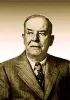
Birth date
10/02/1879
Death date
08/02/1955
Birth town
Pennsylvania
Country
USA
Poems by this Poet
Displaying 1 - 10 of 126
| Title | Post date | Rating | Comments |
|---|---|---|---|
| The Rock | 0 | ||
| New England Verses | 0 | ||
| Statue against a Clear Sky - | 0 | ||
| Invective against Swans | 0 | ||
| The Load of Sugar-Cane | 0 | ||
| The Doctor of Geneva | 0 | ||
| Last Looks at the Lilacs | 0 | ||
| The Apostrophe to Vincentine | 0 | ||
| The Weeping Burgher | 0 | ||
| Banal Sojourn | 0 |
Wallace Stevens was regarded as one of the most significant American poets of the 20th century. Stevens largely ignored the literary world and he did not receive widespread recognition until the publication of his Collected Poems (1954). In this work Stevens explored inside a profound philosophical framework the dualism between concrete reality and the human imagination. For most of his adult life, Stevens pursued contrasting careers as a insurance executive and a poet.
Wallace Stevens was born in Reading, Pennsylvania, as the son of Garrett Barcalow Stevens, a prosperous country lawyer. His mother's family, the Zellers, were of Dutch origin. Stevens attended the Reading Boys' High School, and enrolled in 1893 at Harvard College. During this period Stevens began to write for the Harvand Advocate, Trend, and Harriet Monroe's magazine Poetry.
After leaving Harvard without degree in 1900, Stevens worked as a reporter for the New York Tribune. He then entered New York Law School, graduated in 1903, and was admitted to the bar next year.
Stevens worked as an attorney in several firms and in 1908 began working with the American Bonding Company. He married Elsie Kachel Moll, a shopgirl, from his home town; their daughter, Holly, was born in 1924.
Influenced by Ezra Pound, Stevens wrote 'Sunday Morning', his famous breakthrough work. It starts with 'coffee and oranges in a sunny chair' but ends with images of another reality, death, and universal chaos.
She hears, upon that water without soud,
A voice that cries: "The tomb in Palestine,
Is not the porch of spirits lingering;
It is the grave of Jesus, where He lay."
We live in an old chaos of the sun,
Or old dependency of day and night,
Or island solitude, unsponsored, free,
Of that wide water, inescapable.
(from Sunday Morning)
His first collection of verse was , Harmonium (1923), at the age of forty-four. Although it was well received by some reviewers, , it sold only 100 copies. Currently the collection is regarded as one of the great works of American poetry. Harmonium included 'The Emperor of the Ice Cream', one of Stevens's own favourite poems, 'Le Monocle de Mon Oncle', 'The Man Whose Pharynx Was Bad', and 'Thirteen Ways of Looking at a Blackbird'.
In the mid-1910s Stevens moved to Connecticut, where he worked as a specialist in investment banking of the Hartford Accident and Indemnity Company. Insurance business took most of Stevens's time and he published very little. Stevens's next collection of poems, was published in 1935, and received mixed critics, with accusations of indifference to political and social tensions of the day from the Marxist journal New Masses. However, according to Joan Richardson's biography from 1988, Stevens was a closet socialist during the 1930's, but did not make his views a public issue In Owl’s Clover(1937) Stevens meditated on art and politics.
From the early 1940s Stevens entered a period of creativity that continued until his death in Hartford on August 2, in 1955. He turned gradually away from the playful use of language to a more reflective, though abstract style. Among his acclaimed poems were 'Notes toward a Supreme Fiction', 'The Auroras of Autumn', 'An Ordinary Evening in New Haven', and 'The Planet on the Table'.
Before gaining national fame as a poet Stevens enjoyed a high respect among his colleagues. His life as a corporate lawyer did not impede his creativity as a lyric poet.
In 1946 Stevens was elected to the National Institute of Arts and Letters, in 1950 he received the Bollingen Prize in Poetry, and in 1955 he was awarded both the Pulitzer Prize and the National Book Award.
I know noble accents
And lucid, inescapable rhythms;
But I know, too,
That the blackbird is involved
In what I know.
(from Thirteen Ways of Looking at a Blackbird)
Wallace Stevens was born in Reading, Pennsylvania, as the son of Garrett Barcalow Stevens, a prosperous country lawyer. His mother's family, the Zellers, were of Dutch origin. Stevens attended the Reading Boys' High School, and enrolled in 1893 at Harvard College. During this period Stevens began to write for the Harvand Advocate, Trend, and Harriet Monroe's magazine Poetry.
After leaving Harvard without degree in 1900, Stevens worked as a reporter for the New York Tribune. He then entered New York Law School, graduated in 1903, and was admitted to the bar next year.
Stevens worked as an attorney in several firms and in 1908 began working with the American Bonding Company. He married Elsie Kachel Moll, a shopgirl, from his home town; their daughter, Holly, was born in 1924.
Influenced by Ezra Pound, Stevens wrote 'Sunday Morning', his famous breakthrough work. It starts with 'coffee and oranges in a sunny chair' but ends with images of another reality, death, and universal chaos.
She hears, upon that water without soud,
A voice that cries: "The tomb in Palestine,
Is not the porch of spirits lingering;
It is the grave of Jesus, where He lay."
We live in an old chaos of the sun,
Or old dependency of day and night,
Or island solitude, unsponsored, free,
Of that wide water, inescapable.
(from Sunday Morning)
His first collection of verse was , Harmonium (1923), at the age of forty-four. Although it was well received by some reviewers, , it sold only 100 copies. Currently the collection is regarded as one of the great works of American poetry. Harmonium included 'The Emperor of the Ice Cream', one of Stevens's own favourite poems, 'Le Monocle de Mon Oncle', 'The Man Whose Pharynx Was Bad', and 'Thirteen Ways of Looking at a Blackbird'.
In the mid-1910s Stevens moved to Connecticut, where he worked as a specialist in investment banking of the Hartford Accident and Indemnity Company. Insurance business took most of Stevens's time and he published very little. Stevens's next collection of poems, was published in 1935, and received mixed critics, with accusations of indifference to political and social tensions of the day from the Marxist journal New Masses. However, according to Joan Richardson's biography from 1988, Stevens was a closet socialist during the 1930's, but did not make his views a public issue In Owl’s Clover(1937) Stevens meditated on art and politics.
From the early 1940s Stevens entered a period of creativity that continued until his death in Hartford on August 2, in 1955. He turned gradually away from the playful use of language to a more reflective, though abstract style. Among his acclaimed poems were 'Notes toward a Supreme Fiction', 'The Auroras of Autumn', 'An Ordinary Evening in New Haven', and 'The Planet on the Table'.
Before gaining national fame as a poet Stevens enjoyed a high respect among his colleagues. His life as a corporate lawyer did not impede his creativity as a lyric poet.
In 1946 Stevens was elected to the National Institute of Arts and Letters, in 1950 he received the Bollingen Prize in Poetry, and in 1955 he was awarded both the Pulitzer Prize and the National Book Award.
I know noble accents
And lucid, inescapable rhythms;
But I know, too,
That the blackbird is involved
In what I know.
(from Thirteen Ways of Looking at a Blackbird)